
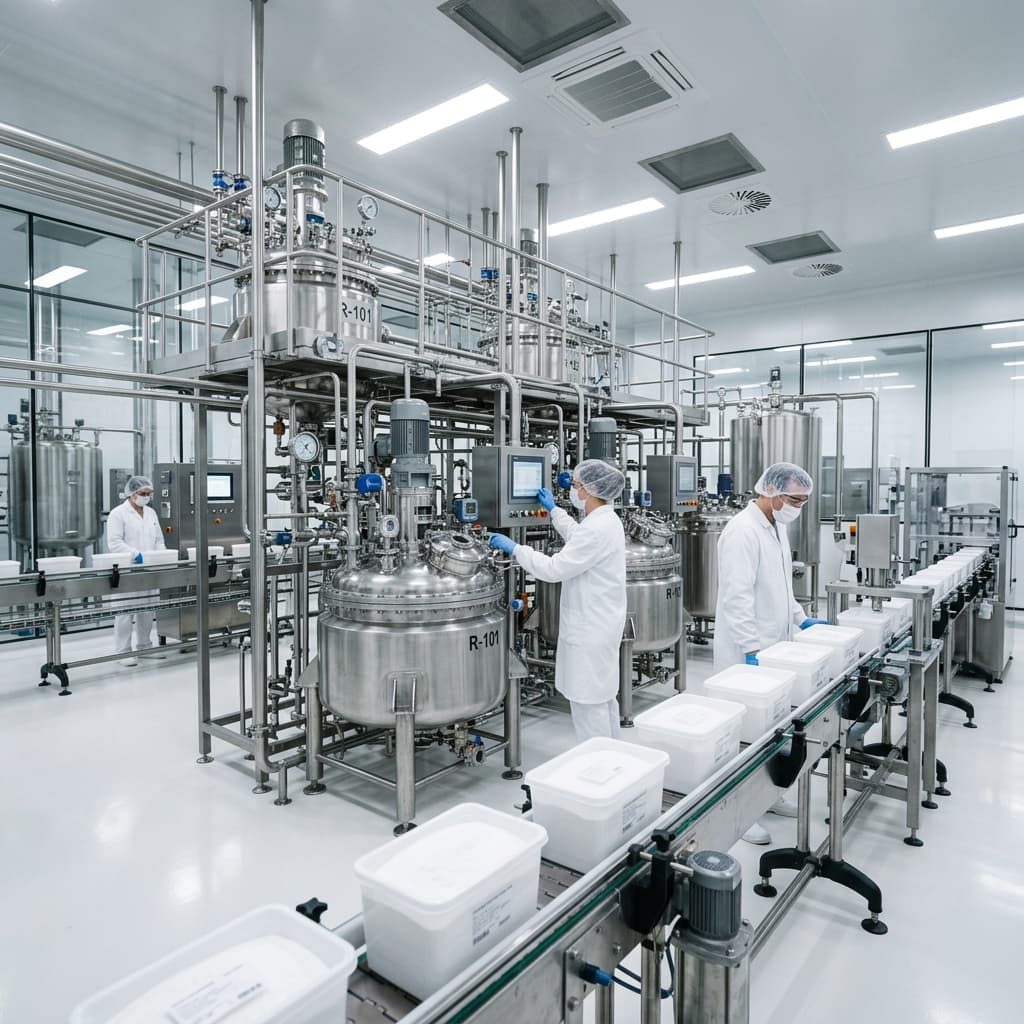
This article provides an in-depth technical analysis and operational overview of scaling up d-camphor manufacturing: batch to continuous reactors. In the chemical manufacturing sector, maintaining consistent quality and purity is the highest priority for both domestic distribution and export markets.
Technical Analysis of D-Camphor
When manufacturing D-Camphor, physical properties such as melting range, volatility, purity levels, and composition profile dictate final application performance. For pharmaceutical and high-end industrial buyers, verifying these properties via certified laboratory assays is essential.
| Parameter | Specification | Test Method |
|---|---|---|
| Assay Purity | ≥ 99.0% | GC-FID |
| Melting Point | 175 - 180 °C | Capillary Tube |
| Moisture Content | ≤ 0.5% | Karl Fischer |
| Residue on Ignition | ≤ 0.05% | Muffle Furnace |
Production and Supply Chain Operations
Efficient logistics and safety-compliant packaging lines are vital. Products are packaged in moisture-barrier PE bags inside robust fiber drums or UN-approved HDPE containers to prevent sublimation and maintain physical integrity during sea transit to destinations like Sri Lanka.
- Robust incoming raw material inspection (GC validation of feedstock)
- In-process reactor temperature monitoring and control
- Strict batch-wise record logging (BMR traceability)
- Post-purification testing and retained sample archival
Frequently Asked Questions
What is the standard purity specification for D-Camphor?
Standard purity is typical NLT 99.0% GC area percentage for premium pharmaceutical applications, and NLT 98.0% for general industrial use. Verification is confirmed by gas chromatography.
How should D-Camphor be stored?
Store in a cool, dry, well-ventilated warehouse below 25°C in airtight containers to prevent sublimation loss and moisture absorption.
Useful Resources
Kalasam Technical Team
Quality, Manufacturing & Export Divisions